
Pakistan’s climate can be challenging for homeowners, with hot summers, dusty winds, seasonal rainfall, and changing temperatures throughout the year. Choosing the right windows can help maintain indoor comfort, reduce dust infiltration, and protect your home from outdoor weather conditions. uPVC windows in Pakistan are a popular option because of their low maintenance, thermal insulation potential, and resistance to moisture and termites.
At Al Munir, we help customers explore uPVC window solutions for modern homes, apartments, offices, and commercial buildings.
Why Are uPVC Windows Suitable for Pakistan’s Climate?
uPVC stands for unplasticized polyvinyl chloride, a durable material widely used in window and door frames. Unlike traditional timber, uPVC does not require routine painting and is resistant to termites.
When designed with quality profiles, suitable glazing, and proper seals, uPVC windows can provide several advantages for Pakistani properties.
- Heat insulation: Helps reduce heat transfer when combined with appropriate glazing.
- Dust protection: Well-fitted frames and quality weather seals help limit dust entering the home.
- Weather resistance: uPVC profiles resist moisture and do not rust.
- Noise reduction: Suitable glazing and effective sealing can reduce outside noise.
- Low maintenance: Regular cleaning is generally sufficient to keep the frames looking good.
- Modern appearance: Available in different window styles, colours, and configurations.
The actual performance depends on the complete window system, including profile quality, glass, hardware, and installation.
7 Things to Consider When Choosing uPVC Windows
1. Choose Quality uPVC Profiles
The quality of the window profile plays an important role in durability and performance. Look for profiles with consistent manufacturing quality, suitable wall thickness, reliable joining, and specifications appropriate for your window dimensions.
For larger windows, ask whether reinforcement is required to support the frame and hardware. Do not choose a window based on price alone; compare the profile specifications before making a decision.
2. Select the Right Glass for Heat Control
Glass is an important part of a window’s thermal performance. In areas with very hot summers, selecting suitable glazing can help improve indoor comfort.
Consider these options:
- Single glazing: A basic option, generally offering less thermal insulation.
- Double glazing: Uses two panes of glass separated by a sealed gap and can improve insulation.
- Solar-control glass: Can help reduce solar heat gain, depending on its specifications.
- Laminated glass: Provides additional benefits related to safety and sound control, depending on the glass construction.
For homes exposed to strong sunlight, discuss double glazing or solar-control glass with your supplier. The best option depends on your budget, orientation, and local conditions.
3. Check the Sealing Against Dust
Dust can enter through gaps around poorly fitted windows. This is especially important in cities and areas exposed to dusty winds.
Before purchasing uPVC windows, check the quality of the gaskets, weather seals, locking points, and frame joints. Ask your installer how the window will be sealed against the surrounding wall.
Proper installation is essential. Even a high-quality window may perform poorly if gaps remain around the frame.
4. Choose a Suitable Window Opening Style
Different window styles offer different benefits. Select a configuration based on your room layout, ventilation needs, available space, and cleaning requirements.
Sliding uPVC windows: These move horizontally and are useful where opening panels should not take up interior or exterior space.
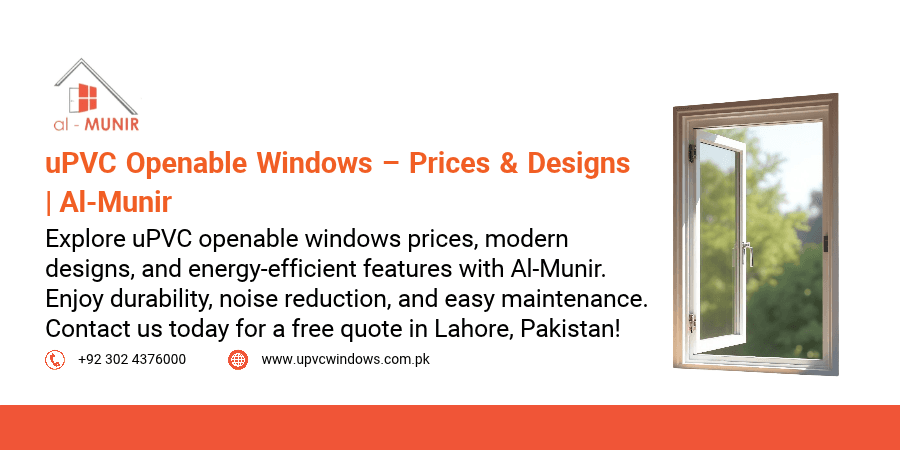
Casement or openable uPVC windows: These open inward or outward, depending on the design. Their compression seals can provide effective weather sealing when correctly adjusted.
Fixed uPVC windows: These do not open and are suitable for areas where natural light and views are the main priorities.
Tilt and turn uPVC windows: These provide different opening positions in one system, depending on the product design.
Choose a style that balances ventilation, ease of use, and protection against outdoor conditions.
5. Consider Rain and Weather Resistance
Although many parts of Pakistan experience dry, hot weather, seasonal rain and strong winds can also affect buildings. A good window should be designed to manage water and resist weather exposure.
Ask about drainage channels, weather seals, frame joints, and installation details. Properly designed drainage helps water escape from the window system instead of collecting inside the frame.
Professional installation and correct exterior sealing are important for preventing water infiltration around the window opening.
6. Check Hardware, Locks and Security
Handles, hinges, rollers, and locking systems affect the operation and lifespan of your windows.
Before placing an order, check that the hardware feels sturdy, the panels move smoothly, and the locks engage properly. For ground-floor windows or accessible openings, discuss suitable security hardware and appropriate safety glazing.
Regular inspection can also help identify loose handles, worn seals, and alignment issues before they become bigger problems.
7. Compare Prices and Installation Quality
The price of uPVC windows in Pakistan depends on window dimensions, profile specifications, glass type, opening style, hardware, colour, and installation requirements.
To compare quotations fairly, ask each supplier to specify:
- Profile brand and specifications.
- Glass type and thickness.
- Hardware and locking system.
- Window measurements and configuration.
- Installation and finishing charges.
- Warranty terms and after-sales support.
A lower quotation may not include the same glass, hardware, or installation work as a more comprehensive quotation. Comparing matching specifications helps you identify better value.
Contact Al Munir
- Phone: 0302-4376000
- Email: info@almunirupvcwindows.com