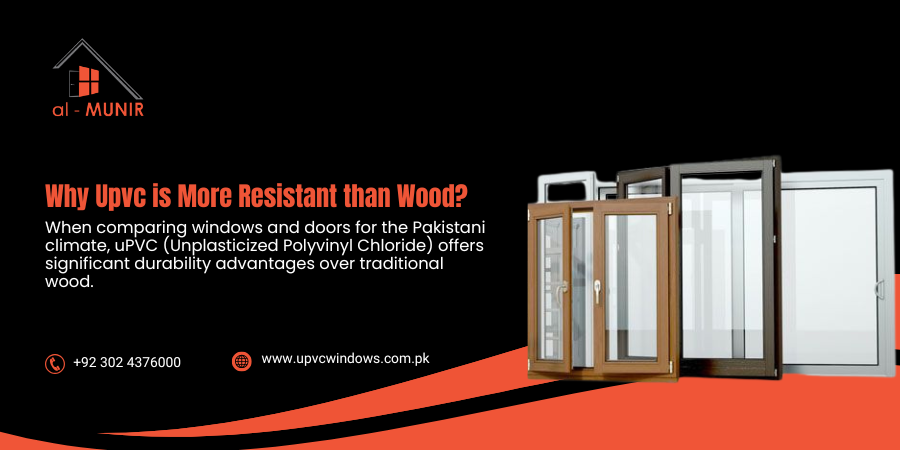

When choosing materials for windows, doors, or outdoor structures, weather resistance is one of the most important factors to consider. Among the most popular options, uPVC (unplasticized polyvinyl chloride) and wood stand out but they perform very differently when exposed to the elements.
Al Munir uPVC windows and doors providing best quality any type of windows in all over Pakistan.
What is uPVC?
uPVC is a rigid, durable form of plastic widely used in construction, especially for window frames, doors, and cladding. Unlike traditional PVC, uPVC does not contain plasticizers, making it stronger and more resistant to environmental stress.
The Impact of Weather on Materials
Outdoor materials must withstand a variety of conditions, including:
- Heavy rain and humidity
- Extreme heat and sunlight
- Cold temperatures and frost
- Wind and dust exposure
Over time, these factors can weaken materials, causing them to warp, crack, or deteriorate.
Why uPVC Outperforms Wood in Weather Resistance
1. Superior Moisture Resistance
Wood is naturally porous, meaning it absorbs water. This can lead to swelling, warping, and even rot over time—especially in humid or rainy climates. uPVC, on the other hand, is completely water-resistant and does not absorb moisture, making it ideal for all weather conditions.
2. No Risk of Rot or Termite Damage
Wood is highly susceptible to termites, fungi, and decay, particularly in damp environments. uPVC is non-organic, so it does not attract pests or support fungal growth, ensuring long-term durability without costly treatments.
3. Excellent UV Resistance
Prolonged exposure to sunlight can cause wood to fade, crack, or weaken. uPVC is designed to resist UV rays, maintaining its color and structural integrity even under harsh sun exposure.
4. Minimal Maintenance Required
Wood requires regular painting, polishing, or sealing to maintain its appearance and protect it from weather damage. uPVC requires very little maintenance—just occasional cleaning with soap and water—saving time and money.
5. Dimensional Stability
Temperature changes can cause wood to expand and contract, leading to cracks and gaps. uPVC remains stable across a wide temperature range, ensuring a consistent fit and long-lasting performance.
6. Long Lifespan
Thanks to its resistance to moisture, UV rays, and pests, uPVC has a significantly longer lifespan than wood. It can last for decades without losing its functionality or appearance.
Environmental Considerations
While wood is often seen as a natural option, it requires ongoing chemical treatments and maintenance that can impact the environment. uPVC is recyclable and reduces the need for frequent replacements, making it a more sustainable long term choice.
Contact now and get best quality uPVC of windows and doors now!